Most of us are in tune with our bodies—we notice a new ache after a workout or a sharp pain when we move the wrong way. However, when it comes to the heart, the symptoms aren’t always a chest-clutching moment. Often, they are subtle, easy to ignore, and easy to explain away.
Cardiology experts at McLaren Greater Lansing are urging the community to recognize these “quiet” signals before they become a crisis.
“Some patients experience symptoms on and off hours or days before a heart attack that can be subtle and easily rationalized as something else,” said Dr. Majid Mughal, an interventional cardiologist at McLaren Greater Lansing Cardiovascular Associates. “In reality, this period of early heart attack symptoms is your body ringing the alarm bells that something is wrong.”
While every person is different, the most common early heart attack symptoms are:
- Chest pain or discomfort that comes and goes
- Unusual fatigue
- Difficulty breathing with usual activities
- Episodes of nausea
- Cold sweats
- The sense that you just don’t feel right
“The difference in early heart attack symptoms and other conditions, such as flu or indigestion, is the severe chest pressure or squeezing and pain radiating to the arm/jaw instead of fever or body aches,” said Dr. Mughal. “It’s important to question the symptoms that are not normal for you, and if you are experiencing any of these early heart attack symptoms, get emergency care as soon as possible.”
Heart disease remains the leading cause of death in the United States. In 2024 alone, heart disease accounted for more than 26,000 deaths in Michigan. In a cardiac emergency, time is muscle.
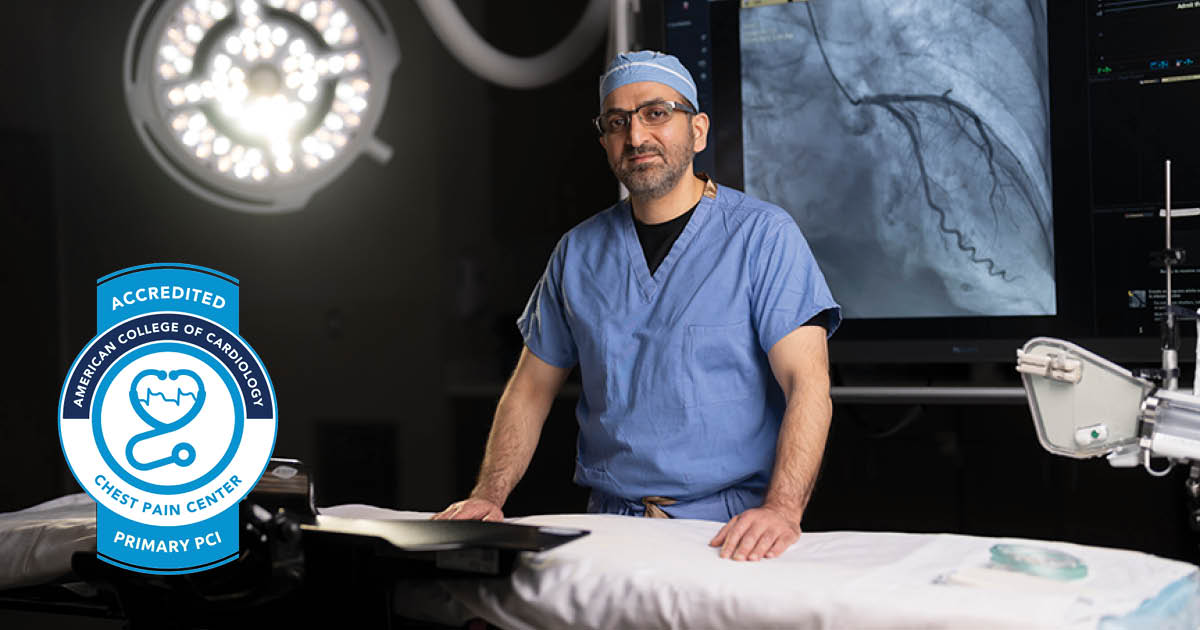
McLaren Greater Lansing recently earned the Chest Pain Center Accreditation with Primary PCI from the American College of Cardiology. This makes it the only hospital in the Tri-County Area with this specific designation for skill and speed in treating heart attacks.
Accredited centers are equipped to provide faster treatment during those critical early stages, significantly improving survival rates and reducing long-term heart damage.
To learn more about the Heart and Vascular Institute at McLaren Greater Lansing, click here.
For more articles on health and wellness, click here.